
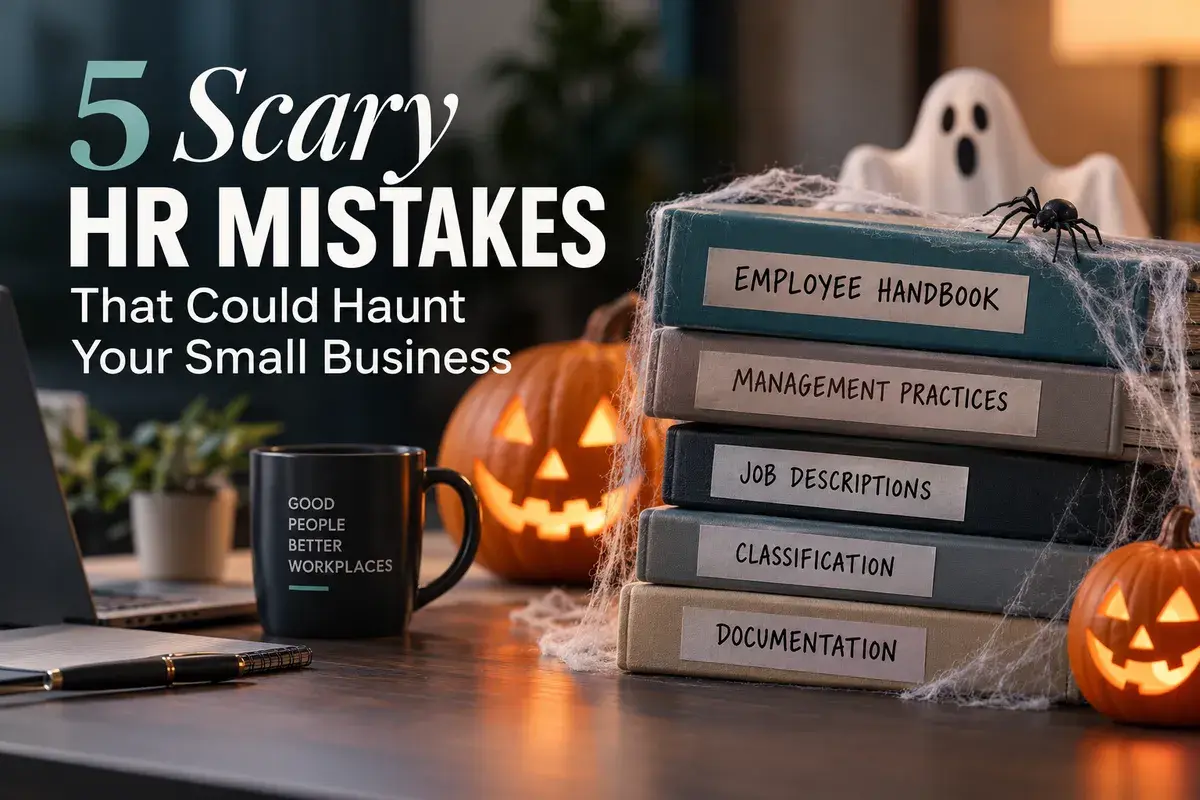
Halloween has plenty of things to be afraid of. But if you're running a business, some of the scariest monsters aren't hiding under the bed.
They're hiding in your employee handbook, your management practices, and that performance conversation nobody bothered to document.
And unlike the monsters in scary movies, these can actually cost you money.
Here are five HR nightmares we see in growing businesses, along with a few ways to keep them from coming back to haunt you.
1. The Zombie Policy: Dead but Still Walking
You know the one. It's been sitting in your employee handbook for years. Nobody remembers who wrote it. Half the managers don't follow it. And there's a good chance nobody has checked whether it's still compliant since people were using BlackBerrys.
Yet somehow, it's still there.
Outdated policies can create confusion, inconsistent treatment, and unnecessary legal exposure.
How to kill the zombie: Review your employee handbook at least annually and whenever significant employment laws change. Compare what's written with what actually happens in your workplace.
If your policies and practices don't match, find out why. Update the language, correct the practices, and make sure managers understand the expectations.
 The scary part? An outdated handbook can give you a false sense of security while creating problems you don't even know exist.
2. The Ghost Employee: Physically Present, Mentally Gone
They're showing up. They're collecting a paycheck. They're even attending meetings.
But somewhere along the way, their enthusiasm disappeared.
Disengagement doesn't always look like poor performance. Sometimes it looks like someone who used to contribute ideas suddenly going silent.
And sometimes, that employee is already interviewing somewhere else.
How to Make the Ghost Reappear:
Start with a conversation, not an assumption. Ask what's working, what's frustrating, and what support they need. Make regular one-on-ones meaningful instead of treating them like another calendar obligation.
Not every disengaged employee can be reengaged, and not every quiet employee is disengaged. But you'll never know what's happening if you don't ask.
The scary part? By the time someone submits their resignation, the opportunity to address the underlying problem may have passed.
3. The Vampire Manager: Draining the Life Out of Everyone
Every workplace has the potential for one. The manager who micromanages every detail. Changes priorities without warning. Takes credit for the team's accomplishments. Or somehow turns a five-minute question into a 45-minute lecture.
The team is exhausted, morale is sinking, and leadership can't figure out why turnover keeps climbing.
How to stop the bloodsucking:
Managers need more than a job title and a set of direct reports.
They need training in communication, performance management, coaching, and conflict resolution. They also need feedback about their own effectiveness.
Pay attention to employee concerns, turnover patterns, and exit interview themes.
And when a manager's behavior is creating problems, address it directly.
The scary part? Even the best team can fall apart if leadership is not focused on the right things.
4. Frankenstein's Job Description: A Monster of Your Own Making
It started as one job.
Then someone left, so you added their responsibilities. Another department needed help, so you added a few more. Eventually, you've got an administrative assistant managing payroll, supervising employees, coordinating marketing, and handling customer complaints.
But the job description still says "other duties as assigned."
Sound familiar?
Poorly defined roles can lead to employee frustration, compensation inconsistencies, and wage-and-hour compliance problems.
How to Tame The Monster:
Review what employees actually do, not just what their job descriptions say.
Make sure responsibilities, reporting relationships, compensation practices, and classifications are appropriate.
And remember: A fancy job title doesn't automatically make someone exempt from overtime. Classification depends on applicable legal requirements, including actual job duties and compensation.
The scary part? Misclassification and wage-and-hour mistakes can become expensive, especially when they affect multiple employees.
5. The Phantom Paper Trail: The Documentation That Never Existed
"We talked about it several times."
"Everyone knew there was a problem."
"I told them they needed to improve."
Those statements may sound familiar, but they're not substitutes for a reliable record of what happened.
When a termination, disciplinary action, or employee complaint is challenged, missing documentation can make an otherwise defensible decision much harder to explain.
How to Catch The Phantom:
Document significant performance conversations, conduct concerns, expectations, and follow-up actions.
Keep records factual, timely, and consistent. Focus on observable behavior rather than personal opinions.
And don't wait until you're considering termination to start documenting problems.
The scary part? The conversation you thought was too minor to document might become important six months later.
Don't Let Your HR Become a Horror Story
Here's the good news: Most HR nightmares don't appear overnight.
They develop gradually.
A policy that doesn't get updated. A manager who never receives feedback. A job description that keeps growing. A difficult conversation that gets postponed.
Individually, they may seem small. Together, they can create some very expensive problems.
The best defense isn't a silver bullet, a wooden stake, or an emergency call to HR after everything goes wrong.
It's addressing the little problems before they become big ones.
Frequently Asked Questions About Small Business HR Mistakes
What are the most common HR mistakes small businesses make?
Common mistakes include outdated employee handbooks, inconsistent management practices, employee misclassification, unclear job descriptions, and inadequate documentation of performance or conduct issues. These problems often develop gradually and can create costly compliance and employee relations challenges.
How often should a small business update its employee handbook?
At least annually, and whenever significant employment laws or business practices change. California employers should pay particular attention to state and local requirements involving paid sick leave, wages, employee classifications, and protected leave.
Can incorrect employee classifications create legal problems?
Yes. Incorrectly classifying employees as exempt from overtime or treating employees as independent contractors can result in unpaid wages, penalties, and other liabilities. In California, classification rules are particularly important, and actual working relationships matter more than job titles.
Why is employee performance documentation important?
Accurate documentation helps employers communicate expectations, track performance concerns, and explain employment decisions. It can also provide valuable evidence if an employee later challenges a disciplinary action or termination. Documentation should be factual, timely, and consistent.
How can small businesses prevent expensive HR mistakes?
Start with the basics: maintain current policies, review job classifications, train managers, address employee concerns early, and document important employment decisions. Periodic HR reviews can help identify risks before they become more serious problems.
What's Lurking in Your HR Department?
You don't need to wait for a workplace horror story to find out.
Neutral Ground Partners helps growing businesses identify risks, strengthen people practices, and handle workplace challenges before they spiral out of control.
No tricks. No unnecessary drama. Just practical HR guidance.
Visit neutralgroundhr.com, email support@neutralgroundhr.com, or call 858-215-2463.
Frequently Asked Questions About Small Business HR Mistakes
What are the most common HR mistakes small businesses make?
Common mistakes include outdated employee handbooks, inconsistent management practices, employee misclassification, unclear job descriptions, and inadequate documentation of performance or conduct issues. These problems often develop gradually and can create costly compliance and employee relations challenges.
How often should a small business update its employee handbook?
At least annually, and whenever significant employment laws or business practices change. California employers should pay particular attention to state and local requirements involving paid sick leave, wages, employee classifications, and protected leave.
Can incorrect employee classifications create legal problems?
Yes. Incorrectly classifying employees as exempt from overtime or treating employees as independent contractors can result in unpaid wages, penalties, and other liabilities. In California, classification rules are particularly important, and actual working relationships matter more than job titles.
Why is employee performance documentation important?
Accurate documentation helps employers communicate expectations, track performance concerns, and explain employment decisions. It can also provide valuable evidence if an employee later challenges a disciplinary action or termination. Documentation should be factual, timely, and consistent.
How can small businesses prevent expensive HR mistakes?
Start with the basics: maintain current policies, review job classifications, train managers, address employee concerns early, and document important employment decisions. Periodic HR reviews can help identify risks before they become more serious problems.
Q: Can Neutral Ground Partners help if my business isn’t in San Diego?
A: Yes. Neutral Ground Partners is based in San Diego and supports employers and employees throughout California, along with some clients outside California.
Ready to Build a Stronger HR Foundation?
Let’s start with a free, 30-minute consultation. No commitment, no pressure, just an honest conversation about what your business needs.
Related Reading
Keep Your Employee Handbook From Becoming a Compliance Nightmare
https://neutralgroundhr.com/blog/startup-hr-that-scales-a-practical-playbook-for-founders
https://neutralgroundhr.com/blog/h-retaliation-claim-after-hr-complaint-small-business
https://neutralgroundhr.com/blog/fractional-hr-with-dispute-resolution
Disclaimer: The content in this blog is provided for general informational and educational purposes only and does not constitute legal advice. Neutral Ground Partners is not a law firm, and reading this post or contacting us does not create an attorney-client relationship. Employment laws vary by state, city, and situation, and they change often. For advice about your specific circumstances, please consult a licensed attorney in your jurisdiction.