
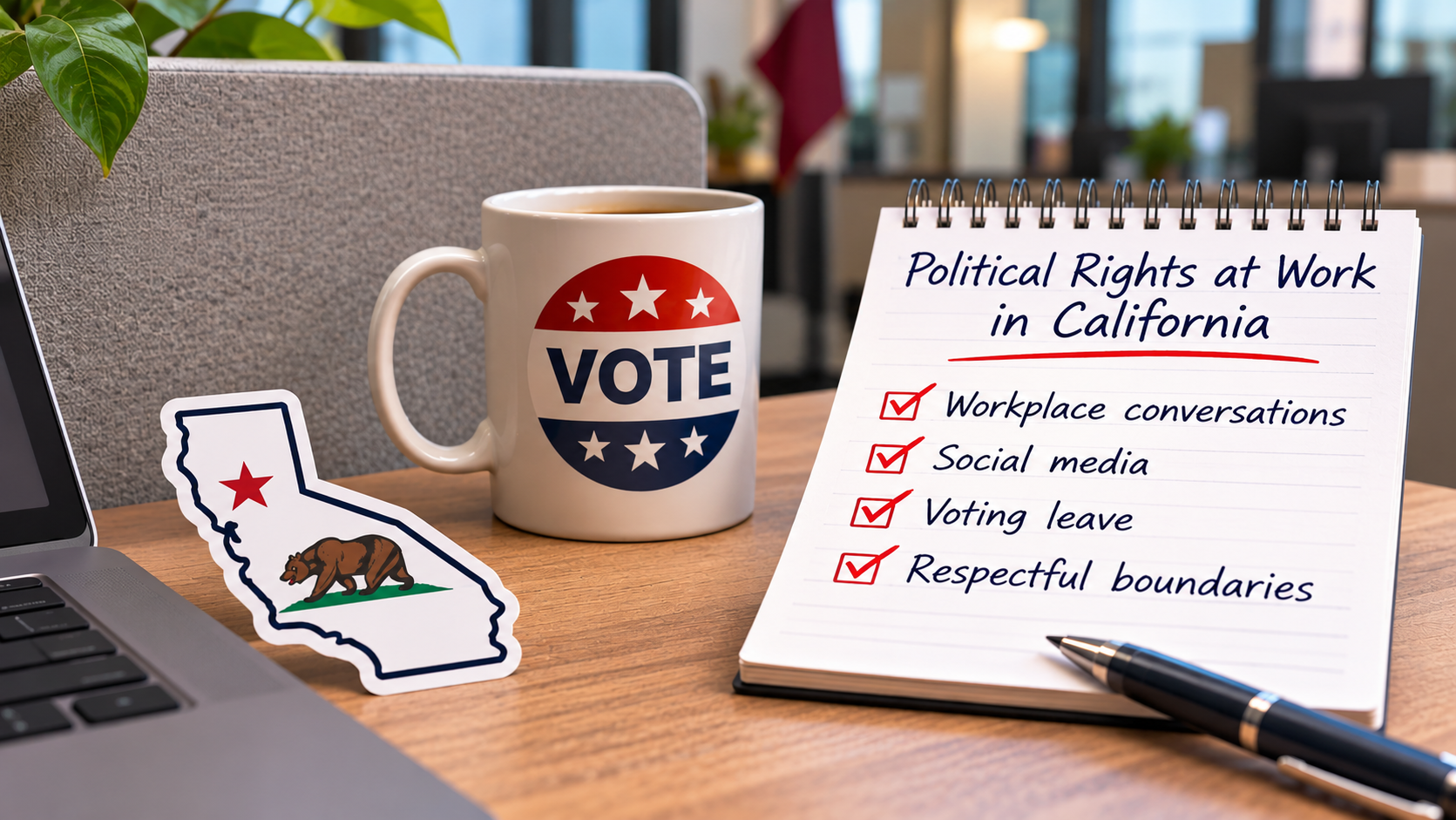
Election Day is November 3, and chances are you've heard more than a few political opinions lately.
Maybe a coworker enjoys discussing the latest election news. Maybe your supervisor has mentioned a candidate they support. Or maybe you've found yourself steering conversations toward safer topics because you'd rather not debate politics during your workday.
Political opinions are personal, and people can feel strongly about them. But working together doesn't require everyone to share the same beliefs.
You can have strong political opinions, respect someone else's perspective, and still maintain a productive working relationship.
The key is understanding where personal expression, workplace expectations, and legal protections intersect.
Here's what California employees should know about political conversations at work, their rights, and how to navigate potentially uncomfortable situations professionally.
Can You Get Fired for Talking About Politics at Work?
The answer depends on the circumstances, including where you work, what you're discussing, and how the conversation affects the workplace.
One common misconception is that the First Amendment protects everything an employee says at work. In reality, constitutional free speech protections generally apply to government action, not private employers.
However, California employees do have certain protections related to political activity.
California Labor Code section 1101 restricts employers from establishing rules or policies that prevent employees from engaging or participating in politics, or that control or direct their political activities or affiliations.
Federal labor law may also protect employees who discuss wages, working conditions, or other employment-related concerns as part of protected concerted activity. The National Labor Relations Board explains these employee rights, including when employees act together to address workplace issues.
At the same time, employers have legitimate reasons to establish workplace expectations regarding professionalism, productivity, respectful communication, and appropriate conduct.
The important distinction is that having a right to hold political beliefs doesn't mean every form of political expression is protected in every workplace situation.
Understanding both your rights and your employer's responsibilities can help you make informed decisions.
 What If Your Coworker Wants to Talk Politics and You Don't?
Not everyone enjoys discussing politics at work.
Some employees welcome the conversation. Others prefer to keep political opinions separate from their professional relationships.
Both preferences deserve respect.
If a coworker brings up a political topic you'd rather avoid, it's perfectly reasonable to establish a friendly boundary.
You might say:
"I know this election is important to a lot of people, but I try to keep politics separate from work."
Or:
"We probably have different perspectives, and that's okay. Let's focus on what we need to get done today."
Most workplace disagreements don't need to become formal complaints. Often, a simple conversation is enough to prevent misunderstandings.
If political discussions become persistent, disruptive, or uncomfortable despite reasonable attempts to redirect them, your manager or HR department may be able to help establish appropriate boundaries.
The goal isn't to prevent people from having opinions. It's to create a workplace where different opinions don't interfere with working together.
What If Your Supervisor Talks About Politics?
Supervisors are people, too. They have personal beliefs, opinions, and interests outside their professional responsibilities.
An occasional political comment from a manager doesn't automatically mean something inappropriate has occurred.
However, because supervisors have responsibility for scheduling, performance evaluations, and other employment decisions, political conversations can sometimes feel different when they involve someone in a leadership position.
An employee may be uncertain whether expressing a different opinion is welcome or whether the conversation is simply casual.
In most situations, the best approach is to remain professional and avoid assuming that a supervisor expects agreement.
If you're uncomfortable participating, you can respectfully redirect the conversation without challenging the supervisor's beliefs.
For example:
"I haven't really been following that issue closely, but I did want to ask you about our upcoming project."
California law also protects employees against certain forms of political coercion. Specifically, California Labor Code section 1102 prohibits employers from using or threatening certain employment consequences to influence employees' political actions or activities.
If you believe you're being pressured to participate in political activities, support a particular candidate, or make political decisions as a condition of employment, it's reasonable to seek clarification or guidance.
Depending on the situation, that may involve speaking with HR, reviewing company policies, or consulting an independent resource.
A healthy workplace allows people to maintain their individual beliefs while working toward shared professional goals.
Can Your Employer Have Rules About Political Posts on Social Media?
Social media can blur the boundaries between personal and professional life.
You might post a political opinion on your personal account outside working hours without giving much thought to how it could be perceived by coworkers, customers, or others connected to your workplace.
California provides certain legal protections related to political activity. Federal labor protections may also apply to some online discussions involving working conditions.
But those protections aren't unlimited.
Employers may have legitimate concerns about posts involving threats, unlawful harassment, confidential business information, or other conduct that affects the workplace.
The details matter.
For example, expressing support for a political candidate is different from posting threatening comments about a coworker.
Similarly, discussing workplace concerns with colleagues may involve different legal protections than making unrelated statements on a public platform.
Before posting, it can be helpful to consider:
- Whether you're expressing a personal opinion or speaking in a way that could be interpreted as representing your employer.
- Whether your comments involve coworkers, customers, or confidential workplace information.
- Whether the content could reasonably be viewed as threatening or harassing.
- Whether your employer has applicable social media policies.
You don't have to abandon your personal beliefs because you're employed.
But understanding how personal expression and professional responsibilities can overlap helps you make thoughtful decisions.
When Does a Political Disagreement Become a Workplace Concern?
Disagreement is not the same as harassment.
Two coworkers can have completely different political beliefs and still maintain a respectful working relationship.
Even an uncomfortable or frustrating conversation doesn't necessarily violate workplace policies or employment laws.
However, political discussions can raise more serious concerns when they involve threats, intimidation, or conduct connected to legally protected characteristics such as race, religion, sex, or national origin.
For example, a disagreement about an election proposal is different from repeatedly making derogatory comments about a coworker's religion or ethnicity.
It's important to distinguish between an ordinary difference of opinion and behavior that may warrant workplace intervention.
If a conversation becomes uncomfortable, consider whether a respectful boundary or direct conversation could resolve the issue.
If the conduct continues, interferes with your work, or involves potentially unlawful behavior, consider using your employer's established reporting procedures.
When raising a concern, focus on specific statements, actions, dates, and workplace effects rather than assumptions about someone's intentions.
The purpose of addressing a workplace concern should be to improve the situation, not to turn every disagreement into a conflict.
Can You Take Paid Time Off to Vote in California?
Yes, under certain circumstances.
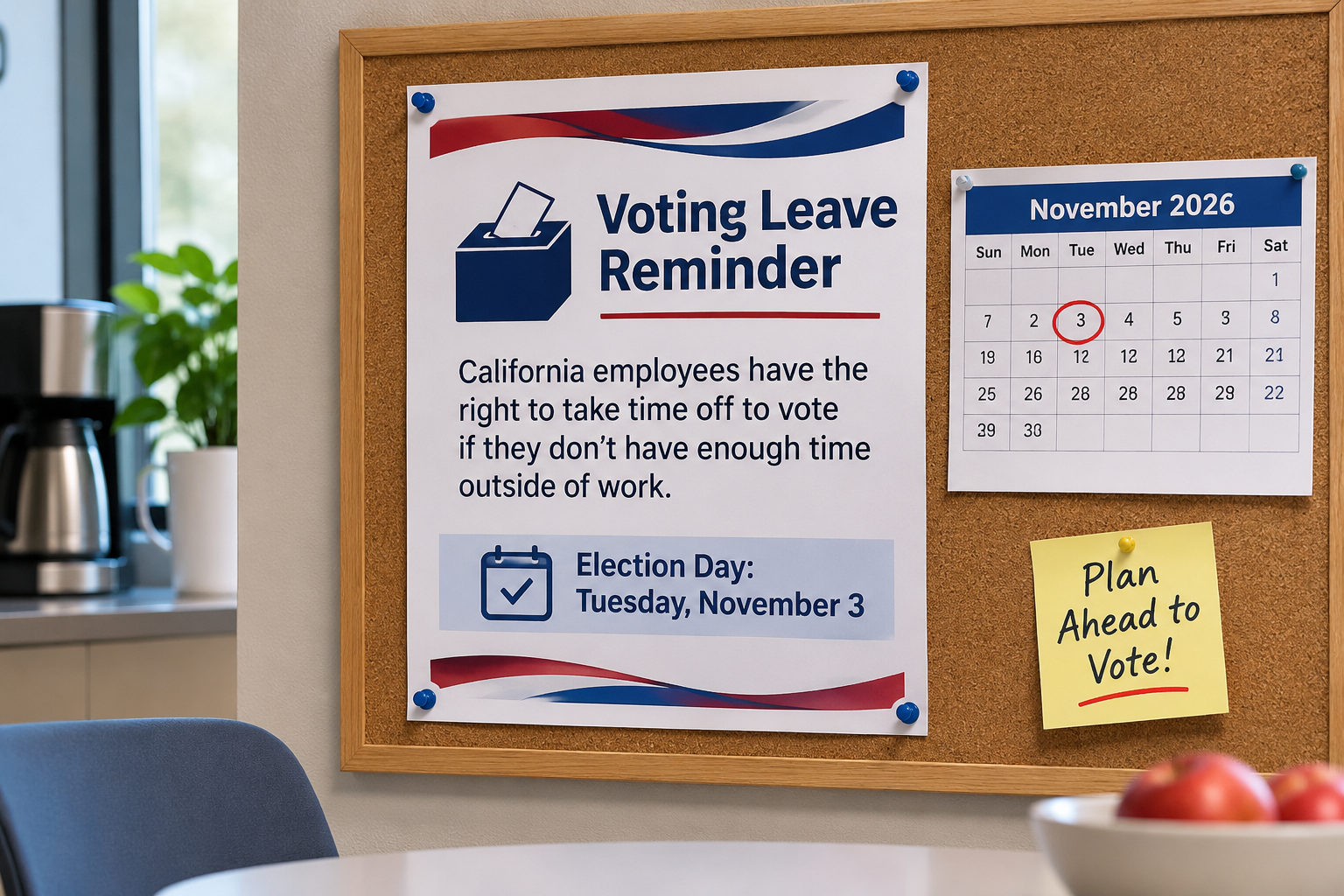
California Elections Code section 14000 provides voting leave protections for employees who do not have sufficient time outside working hours to vote in a statewide election.
According to the California Secretary of State's official voting leave guidance, here's how the law generally works:
- Eligible employees may receive up to two hours of paid time off to vote.
- Additional time may be available when necessary, although employers generally aren't required to pay for more than two hours.
- Voting leave is generally taken at the beginning or end of a work shift unless the employee and employer agree to another arrangement.
- Employees who know they'll need voting leave must notify their employer at least two working days before the election.
Importantly, California law doesn't automatically provide every employee with two paid hours off simply because it's Election Day.
Eligibility depends on whether the employee has sufficient time to vote outside working hours.
If you're unsure whether you qualify, ask your employer about the voting leave process in advance.
Planning ahead makes it easier for both employees and employers to meet their responsibilities while keeping business operations running smoothly.
How Can You Keep Political Differences From Affecting Your Working Relationships?
Political discussions can be challenging because people often connect their opinions to deeply held values and personal experiences.
But having different beliefs doesn't mean coworkers can't trust, respect, or collaborate with one another.
A few practical habits can help:
- Recognize when a conversation isn't productive. Not every disagreement needs to be resolved, especially during the workday.
- Respect other people's boundaries. If someone doesn't want to discuss politics, allow them to step away from the conversation without pressure.
- Avoid making assumptions. A coworker's political opinion doesn't tell you everything about their character, values, or ability to do their job.
- Keep professional responsibilities in perspective. Your shared workplace goals don't disappear because you disagree about an election.
- Address concerns constructively. If something is affecting your ability to work, start with respectful communication or an appropriate workplace resource.
Sometimes maintaining a good working relationship is more valuable than winning a political argument.
And in many cases, you can accomplish both: stay true to your beliefs while treating someone with a different perspective respectfully.
The Bottom Line: You Don't Have to Agree to Work Together
Political differences are a normal part of life, and workplaces bring together people with different backgrounds, experiences, and beliefs.
California employees have important legal protections related to political activity. Employers also have responsibilities to maintain professional environments, apply lawful workplace expectations, and address legitimate concerns.
Those interests don't have to be in conflict.
Most situations are easier to navigate when everyone understands their rights, communicates respectfully, and approaches disagreements with the goal of finding a practical solution.
You don't have to share someone's political beliefs to be a great coworker. And you don't have to compromise your own beliefs to maintain a professional relationship.
Frequently Asked Questions About Employee Political Rights
Can my boss fire me because of who I vote for in California?
California Labor Code sections 1101 and 1102 provide protections against certain employer interference with political activities, including political coercion. Employers cannot lawfully use employment-related threats to control certain protected political activities. However, whether a particular employment decision violates the law depends on the specific circumstances.
Can I be disciplined for political posts on my personal social media?
Possibly, depending on the content, circumstances, and applicable laws. California provides certain protections for political activity, but personal social media posts are not automatically protected in every situation. Employers may also have legitimate concerns involving harassment, threats, confidentiality, or other workplace-related misconduct.
Can I wear a political campaign shirt or button at work?
It depends on your workplace's dress and appearance policies and the legal protections applicable to the situation. Employers may establish lawful dress standards, but those policies must be applied consistently with applicable employee protections, including laws addressing political coercion and protected activity.
Do I have to participate in political conversations with coworkers?
Generally, no. You're free to respectfully decline a political discussion. If conversations become persistent, disruptive, or inappropriate, consider establishing a clear boundary or asking your manager or HR department for guidance.
How do I request paid time off to vote in California?
If you don't have sufficient time outside working hours to vote in a statewide election, you may qualify for voting leave. Notify your employer at least two working days before the election if you know you'll need time off. Eligible employees may receive up to two paid hours, subject to California's voting leave requirements.
Need a Neutral Perspective on a Workplace Question?
Not every workplace concern is a dispute, and not every uncomfortable situation requires a formal complaint.
Sometimes you simply need help understanding your rights, your employer's responsibilities, and the most constructive way to approach a conversation.
Neutral Ground HR provides practical, impartial guidance to employees navigating workplace questions and challenges.
We believe employees and employers benefit when concerns are addressed early, communication stays respectful, and everyone has a clearer understanding of their options.
No unnecessary conflict. No assumptions about who's right or wrong. Just experienced HR guidance focused on practical solutions.
Visit neutralgroundhr.com, email support@neutralgroundhr.com, or call 858-215-2463.
Related Reading
Workplace political discussions affect employees and employers alike. Understanding both perspectives can help create a more respectful and productive environment.
How to Prepare For Difficult Conversations
Internal link — confirm the final published URL before making the article live.
Ready to Build a Stronger HR Foundation?
Let's start with a free, 30-minute consultation. No commitment, no pressure, just an honest conversation about what your business needs.